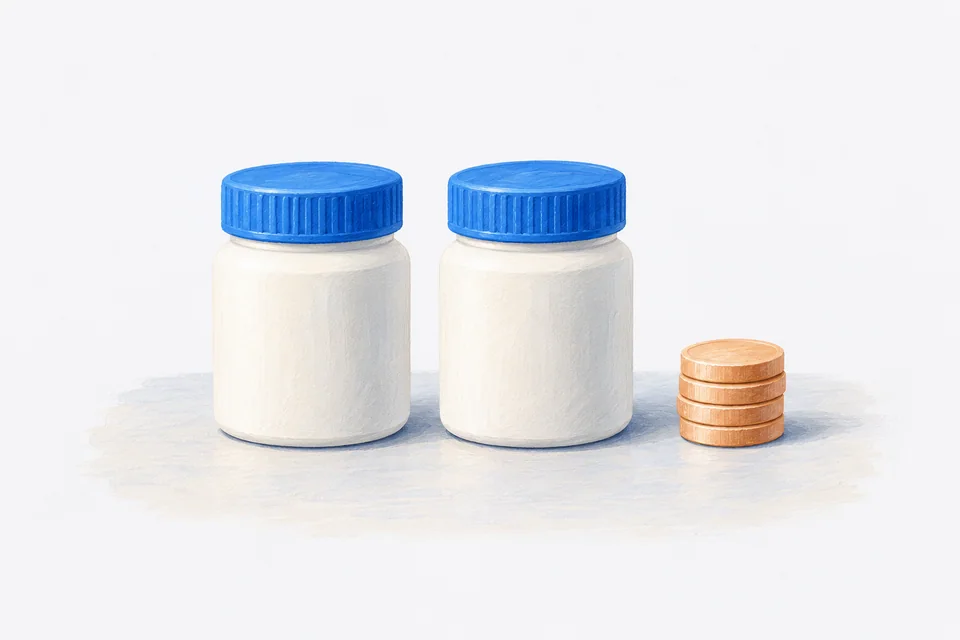
Start by asking whether a generic version is available, because generics often cost less. Then check what government help you qualify for and ask your pharmacist or doctor about cheaper options. If you can't afford a medicine, tell them rather than skipping doses.
Your doctor or pharmacist would much rather know. They may have an option you have not thought of.
Ask about generics
The FDA says generic medicines contain the same active ingredients as the brand-name medicine and must work the same way in the body, with the same strength, dosage form and way of taking it. Generics often cost less because brand-name medicines are typically more costly to develop.
Generics can look different from the brand-name version. Ask your pharmacist if you are not sure a tablet is right, and read about why pills can look different.
Do not switch on your own. Your doctor or pharmacist can tell you whether a generic is right for you.
Check government help
US: Medicare's Extra Help programme helps people with limited income and resources pay for Medicare drug coverage. Some people qualify automatically and others apply. Medicare's page has the current limits, and your State Health Insurance Assistance Program offers free help applying.
England: NHS charges are per item, so a prescription with 3 medicines is charged 3 times. A prescription prepayment certificate can be cheaper if you need a lot of items. The NHS says the 3-month certificate saves money if you need more than 3 items in 3 months and the 12-month one if you need more than 11 in a year. You can also check if you qualify for free prescriptions.
Australia: under the Pharmaceutical Benefits Scheme, the government subsidises the cost of medicine for most medical conditions. Ask your pharmacist how it applies to yours.
Questions to ask your pharmacist or doctor
- Is there a generic or a cheaper alternative that would suit me?
- Is there a larger supply that costs less overall?
- Do I still need everything on this list? Your doctor can review it.
- Is there a programme that could help with this one?
A review is easier with an up-to-date medication list.
Avoid costly surprises
- Refill before you run out. An urgent trip costs more than a planned one. See how to avoid running out.
- Be careful where you buy online. Check that a pharmacy is properly registered in your country. The NHS keeps a list of registered online-only pharmacies.
What not to do
Do not skip doses, split tablets or stretch a supply to save money unless your doctor or pharmacist has said you can. That is a medical decision, and they can help you find a safer option.
Frequently asked questions
Are generics as good as brand-name medicines?
The FDA says generics have the same active ingredients and must work the same way in the body as the brand-name medicine.
Why does a generic look different?
Its appearance can differ from the brand-name version. Ask your pharmacist if you are unsure about a tablet.
Is a prepayment certificate worth it?
In England, the NHS says the 3-month certificate saves money above 3 items in 3 months and the 12-month one above 11 items in a year.
Sources
Generic drugs: questions and answers, FDA. Help with drug costs, Medicare. NHS prescription charges and prescription prepayment certificates, NHS. About the PBS, Pharmaceutical Benefits Scheme.
Cadence is a free medication reminder app for iPhone and Apple Watch. It is not medical software and does not give medical advice. Cadence Pro is a one-time purchase, with no subscription.